May 16, 2026
If You're Running Google Ads and Not Tracking Calls Properly, You're Just Guessing
You can spend thousands on Google Ads and have no idea what's actually working. Call tracking is what turns guessing into optimizing.
Stop. You're Not Optimizing. You're Guessing.
If you're running Google Ads and not tracking calls properly, stop what you're doing. Right now, you are not managing a campaign. You're managing a budget. And there's a big difference.
Managing a budget means you're watching spend. Managing a campaign means you know what's producing results and you're doubling down on what works while cutting what doesn't. You cannot do that if you don't know which keywords, ads, and campaigns are driving phone calls.
For most service businesses, calls are the conversion. Not form fills. Not page views. Not session duration. The phone ringing is the thing that matters. If you're not tracking it, you're flying blind.
What You're Blind to Without Call Tracking
Here's what happens without proper call tracking. You run a Google Ads campaign with 15 ad groups and 80 keywords. You spend $4,000 in a month. Some calls come in. You're not sure how many. You're definitely not sure which keywords drove them.
So you make decisions based on which ads got the most clicks. But clicks and calls are not the same thing. A keyword that drives 50 clicks and zero calls is costing you money. A keyword that drives 10 clicks and 8 calls is a goldmine. Without call tracking, you can't see the difference.
You're optimizing for the wrong signal. Every decision you make without call tracking data is based on incomplete information. Some of those decisions are burning your budget.
How Call Tracking Actually Works
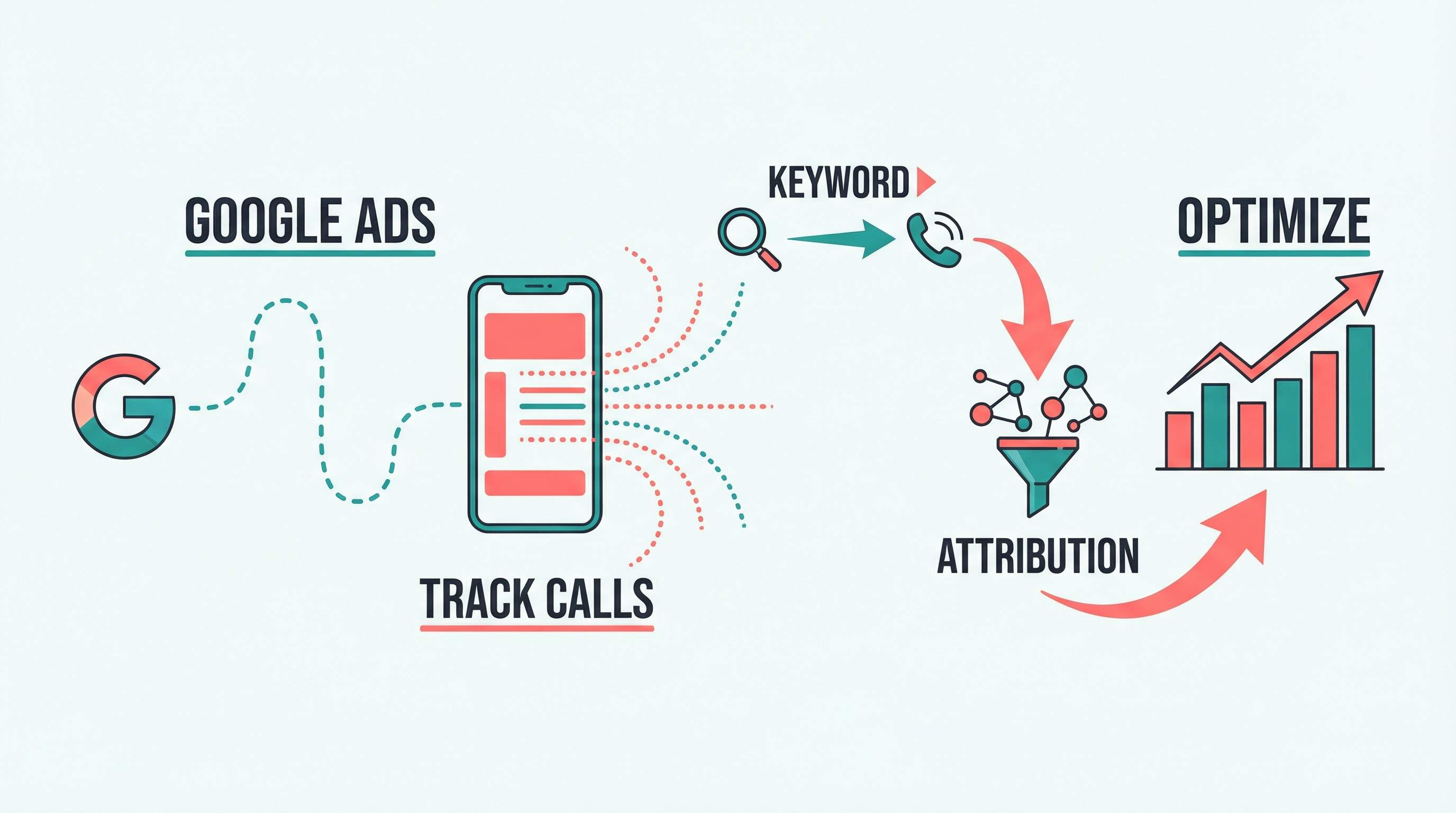
Call tracking assigns unique phone numbers to different campaigns, ad groups, or even individual keywords. When someone calls one of those numbers, the call gets attributed back to the source that drove it.
You can see exactly which campaign, which ad, and which keyword caused the phone to ring. You can see how long the call lasted. You can flag calls as qualified or not. Over time, you build a clear picture of what's actually producing customers versus what's just producing activity.
Google has its own call tracking built in. There are also third-party tools that go deeper. The right solution depends on your volume and how granular you need to get. But some form of call tracking is non-negotiable if you want your Google Ads to be managed intelligently.
How It Changes Your Bidding and Keyword Strategy
Once you have call data flowing, everything changes.
Your bidding strategy shifts. Instead of optimizing for clicks or even form submissions, you're optimizing for calls. Google's smart bidding algorithms can use call conversions as the target, which means the machine learning is working toward the outcome you actually care about.
Your keyword decisions become data-driven. You find out which terms bring in people who are ready to talk and which bring in people who are browsing or clicking by accident. You cut the browsing terms. You increase bids on the call-driving terms. Your cost per qualified lead drops.
Your ad copy improves. When you know which messages drive calls versus clicks, you start writing ads that attract the right person rather than the most people.
Why This Is Non-Negotiable for Service Businesses and Law Firms
If you run a law firm, a home services company, a medical practice, or any business where the conversion is a conversation, call tracking isn't optional. It's the foundation.
In legal marketing especially, the difference between a keyword that drives signed cases and one that drives tire-kickers is enormous. Personal injury firms can pay $50 to $200 per click on competitive keywords. If you don't know which clicks are turning into consultations and which are wasting budget, you could be burning thousands a month on terms that never convert.
The same applies to any high-intent service business. Roofing, HVAC, immigration law, workers compensation. These are categories where a single customer is worth thousands of dollars. The economics of getting call tracking right are obvious.
What Proper Attribution Looks Like
Good call tracking doesn't stop at knowing a call happened. It connects the call to the outcome.
That means integrating with your CRM so you can see which calls became consultations, which became clients, and what revenue they generated. It means listening to call recordings to understand what your intake team is doing well and where they're losing people. It means building a feedback loop between your marketing and your sales process.
This is how you move from "we spend money on Google Ads" to "we know exactly how much it costs us to acquire a client and we're constantly improving that number."
The Next Step
If you're running Google Ads without call tracking, the first move is setting it up. The second move is making sure someone is actually looking at the data and using it to make decisions.
Nine2Five Marketing runs Google Ads campaigns with proper attribution built in from day one. We track calls, connect them to outcomes, and optimize based on what's actually working. If you want to know what your Google Ads are really doing for your business, let's find out together.
Reach out to Nine2Five Marketing and let's talk about your campaigns.
Ready to Grow Your Business?
Let Nine2Five build a campaign that drives real results.
Start a Conversation →